Entrepreneur
AI for Supply Chain Management: Transforming Efficiency
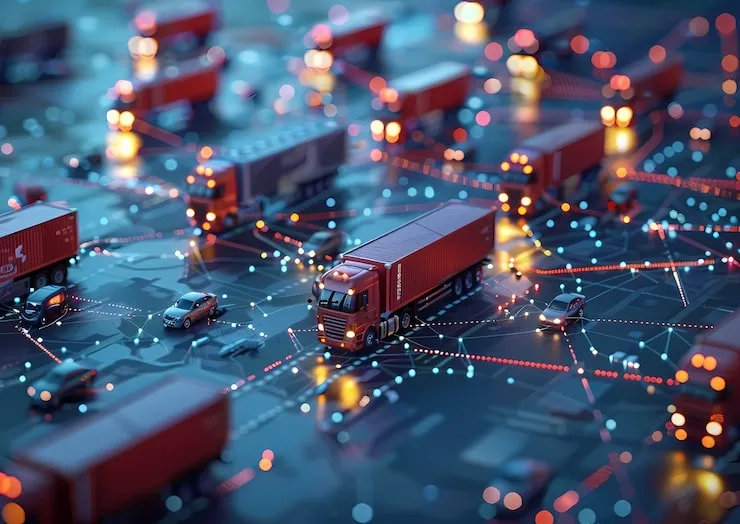
Imagine running an online candy store. You must know the amount of candy, chocolate and lollipops to purchase as well as how to obtain them from the manufacturer, and also how to ensure that they arrive at your store on time. Every day, you have to do this. an immense task! It's called Supply Chain Management--it's focused on organizing, moving and shipping products in a way that all goes efficiently.
Imagine having an intelligent robot assistant which can quickly think as well as remember all the details, and take incredibly good decision. This is what AI (artificial intelligence) does in supply chain management. In this piece we'll go over AI to the management of supply chains in a manner that anyone from 8 to 10 years old will be able to understand.
This article will show you the things AI does, how it's beneficial as well as how organizations are able to use it in a safe and effectively.
What is Supply Chain Management?
Before discussing AI first, we must learn about what is the supply chain. The supply chain describes the process of getting a product from the manufacturing facility to your doorstep.
In the case of the candy store:
- The chocolate is produced in a manufacturing facility.
- Then it is packed before being delivered to a storage facility.
- It is then delivered to the shop.
- Then, it's distributed to clients.
Supply chain management makes certain that these procedures run seamlessly, without any delay, errors or products that are not available.
What is AI and How It Helps?
AI functions as an artificial brain that computers can use. It is able to learn from data it gathers, predict future events, as well as assist humans to make better decision-making.
Supply chain management AI is able to assist:
- Estimate how much of the product you will need.
- Pick the quickest or least expensive ways to deliver.
- Get rid of problems before they occur.
- Be sure that customers receive their order in time.
Imagine AI as a intelligent assistant who is never asleep is never distracted, always remembers and works 24/7.
Read also: AI Systems for Small Businesses: Boost Productivity and Growth
Why Supply Chains Need AI
Supply chains can be intricate. There are many moving components including trucks, factories, stores, warehouses, and of course, customers. In the event of a failure in one component then the entire chain could delay.
AI can be helpful due to the fact that it:
- It saves the time of delivery: It plans the most efficient routes for trucks as well as deliveries.
- reduces errors: It spots errors on the part of shipping or inventory prior to they occur.
- predicts demand: It informs businesses what amount of product consumers will desire.
- saves you money: By reducing waste and delays, companies can spend less.
- keeps customers satisfied: AI makes sure that orders are delivered in time.
Imagine if a candy store had run out of chocolate just prior to a party. AI could help you avoid that by helping you determine the amount of chocolate you'll need.
How AI Works in Supply Chains
AI employs a variety of techniques to manage supply chains:
A) Predictive Analytics
AI examines data from the past to help predict what's coming up.
-
For example, if your shop had sold 100 chocolate bars during Christmas, AI can predict that you will need around 120 chocolate bars for December since there are more customers buying chocolate to celebrate the holidays.
B) Route Optimization
AI discovers the fastest and most cost-effective delivery routes.
-
For instance, if the warehouse is located in one city, but your store is located in another city, AI can choose a path that is less crowded and also saves energy.
C) Inventory Management
AI monitors the status of items at shops and warehouses.
-
For example, it alerts managers that the lollipops are low, and orders additional lollipops automatically.
D) Risk Management
AI detects problems prior to they occur.
-
For instance, if a truck is delayed because of the weather, AI can suggest sending an alternative shipment, or taking different routes.
E) Automation
AI has the ability to help automate repetitive jobs.
-
For example: instead of checking each box manually within the warehouse AI robots read barcodes, and then update the inventory system in real-time.
Real-Life Examples of AI in Supply Chains
Numerous companies employ AI to control their supply chains better:
- Amazon Utilizes AI to determine what items customers might purchase and the best place to place them in order to ensure faster shipping.
- Walmart Utilizes AI to monitor stock levels and improve the delivery route.
- Zara Employs AI to study patterns and ensure the clothes are available when people want them.
Even smaller companies could benefit from AI for simpler tasks, for example, predicting sales and monitoring delivery vehicles.
How Small Businesses Can Use AI in Supply Chains
AI isn't only intended for huge companies. Small businesses also can reap the benefits.
Step 1: Start With One Problem
Select one aspect to be improved:
- Predicting demand
- Managing inventory
- Planning deliveries
Step 2: Choose the Right Tool
A lot of AI tools are pre-designed and user-friendly:
- Inventory management: Zoho Inventory, TradeGecko
- Optimizing routes: Routific, Onfleet
- Forecasting sales forecasting: Forecastly Netstock
Step 3: Test and Learn
Begin small, and monitor your results
- Did AI reduce delays?
- Can you tell if it saved cash?
- Did customers get orders faster?
Step 4: Scale Gradually
After you've established that the AI performs well, consider adding further attributes:
- Automated ordering and reordering
- Manage various warehouses
- Future trends to predict
Benefits of AI in Supply Chains
AI aids supply chains in a variety of ways.
- Faster Delivery: Products reach customers quicker.
- More waste: Only order what is required.
- Better Plan: Companies know what items to keep in stock.
- Cost Savings AI discovers cheaper methods to provide items.
- Customer satisfaction: Orders are delivered in time.
Imagine it as using a magical wand which makes everything run smoothly.
Risks of Using AI in Supply Chains
While AI may be beneficial but there are dangers:
- Information Privacy Be sure that customer details are secure.
- Incorrect information on AI: If AI is given incorrect data It could make errors.
- Price: Some AI tools could be costly.
- Reliance: Don't rely only on AI. Humans are required to supervise crucial duties.
AI can be a helpful tool but not an alternative to humans. Be sure to check and evaluate AI's actions.
Read also: How to Choose the Right AI Development Company for Your
How AI Changes Jobs in Supply Chains
Many people are worried about the possibility that AI could take over the jobs. However, in supply chain, AI mostly:
- Aids people to perform their jobs faster and more efficiently
- Helps with boring or monotonous jobs
- Humans should be focused on their creative and critical decision-making
Example:
- Warehouse workers make use of AI to locate items more quickly.
- Delivery drivers are provided with AI route recommendations to steer clear of congestion.
- Managers are provided with better reporting to help them make better decision-making.
AI and Sustainability in Supply Chains
AI is also a way for companies to become more sustainable:
- Lower fuel consumption by selecting more efficient routes
- Do not produce too many goods, as they can be wasted
- Make the most of warehouse energy consumption
As an example, a food delivery business makes use of AI to design delivery routes that use less fuel and cut carbon emissions.
Fun Analogy: AI as a Super Helper
Imagine running a stand at a lemonade fountain with a group of friends.
- One of my friends remembers how much lemonade was bought in the last week (predictive analytics)
- A third friend is planning the quickest method of bringing sugar and lemons from the supermarket (route optimization)
- A third person checks to see if the straws and cups are sufficient (inventory management)
- Another person watches the skies and anticipates the possibility of rain (risk management)
AI is able to perform all of these tasks at the same in a much faster, better and more precisely than human beings alone!
Tips for Small Businesses Using AI in Supply Chains
- Start with a small amount: Focus on one particular area, such as inventory or delivery.
- Make use of AI tools that are easy to use: Don't pick something that is too complex.
- Results of the monitor: Check if AI can improve effectiveness.
- Training your team Everyone must know how to utilize AI.
- Maintain human control: AI is a assister, not a substitute.
The Future of AI in Supply Chains
In the near future, AI will get smarter and less expensive:
- Many small-scale businesses will be using AI to plan and deliver
- AI can predict demand from customers more precisely
- Warehouse robots will be working in tandem with human workers
- AI helps reduce the amount of waste produced and help protect the natural environment.
Smaller shops as well as local companies can benefit from AI to be competitive with large businesses.
Conclusion
AI in supply chain management is similar to having an intelligent aid who is never asleep. This can be beneficial to businesses:
- Plan deliveries faster
- Make sure you keep track of your inventory
- Know what the customers are looking for.
- Reduce waste and save money.
- Keep customers satisfied
Even smaller businesses can utilize AI tools that help them work more efficiently to do, more efficient, and enjoyable. Start with a small amount, select the appropriate devices, and monitor AI with care. If you use AI properly, businesses will improve their performance, speed up work in delivering the products in time - just like running an ideal lemonade stand everybody loves!


.webp)