Entrepreneur
Challenges Of Ai In Marketing For Entrepreneurs
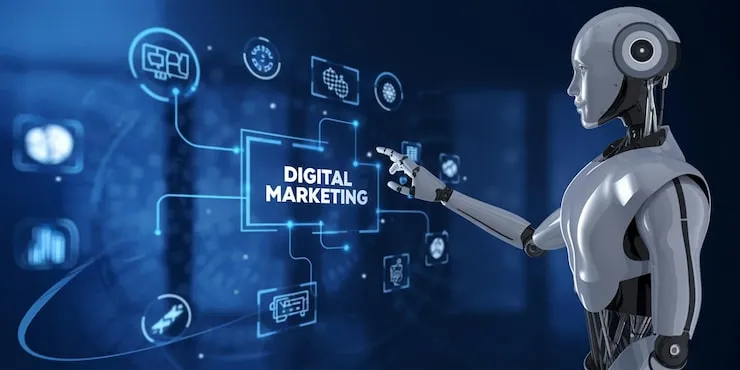
Imagine selling lemonade around your area. It is your responsibility to inform everyone about your lemonade. You need to ensure it looks delicious and get customers to purchase it. It's called marketing--the process by which businesses inform people learn about their goods.
Imagine you have the benefit of a robotic friend that can assist you to create ads, compose messages and find out what customers like about. That's what AI (Artificial intelligence) in the field of marketing helps entrepreneurs. AI is able to do many things however it's not always completely perfect.
The smartest robots also face difficulties, much like we have to. In this piece we'll explore the issues associated with using AI in marketing, and ways entrepreneurs can tackle them. described in a straightforward manner that is suitable for children.
What is AI in Marketing?
Let's first understand what AI means. AI also known as Artificial Intelligence, is like the brain of a computer that is able to be taught, make choices and resolve problems.
In the realm of marketing, AI may:
- Design ads and post for social media
- Send emails to clients
- Give suggestions on what items to offer
- Determine what kind of customers will be interested in
Imagine it as the equivalent of a robotic assistant which is knowledgeable about the tastes of people and assists you in telling the world about your lemonade stand, or bakery.
Why Entrepreneurs Use AI in Marketing
Entrepreneurs use AI because it can:
- Reduce Time The HTML0 save time AI can produce content more quickly than human beings.
- Increase the number of people who can access it The HTML0 platform can reach more people AI will find customers on the internet across the globe.
- Analyze data Analyze Data from HTML0 AI will be able to determine which advertisements work the best and also what users like.
- Personalize Marketing The use of AI will create unique messages for every customer.
Imagine your lemonade vendor giving a text message to each neighbor in the neighborhood "Hi Alex! You can enjoy your preferred strawberry lemonade this morning!" That's the magic of AI marketing.
Read also: Future of Generative AI for Business: What is Coming Next
The challenges entrepreneurs face by implementing AI in Marketing
While AI can be powerful however, there are some pitfalls that entrepreneurs must be aware of. Here are some of them:
1. Data Quality Problems
AI requires data for it to function. The data is the information that customers provide as well as sales and advertisements.
- If the data are inaccurate or not complete, AI can make errors.
- Example For example: If AI is convinced that everybody loves strawberry lemonade, however the vast majority of children really prefer lemonade, your marketing is likely to fail.
Entrepreneurs should ensure the information they provide are correct and clear.
2. High Costs
AI-related tools are costly particularly for small enterprises.
- Examples: AI software is priced at hundreds of thousands of dollars a month.
- Small-scale business owners might be unable to afford the money needed to invest in these devices.
Business owners must be able to balance the costs and benefits prior to using AI.
3. Dependence on Technology
Relying too heavily upon AI could be dangerous:
- If the AI fails or isn't working marketing may cease.
- The entrepreneurs may be less creative If they allow AI take the decisions.
Imagine relying on a bike that gets a flat-tire, you have a backup plan.
4. Understanding AI is Hard
AI can be a bit nebulous.
- Entrepreneurs must be able to utilize AI tools in a proper manner.
- There are many mistakes that can occur when they do not know what AI is up to.
Like learning a new game on video You need to practice in order in order to master the game.
5. Ethical Challenges
Utilizing AI for marketing may create ethical issues:
- AI could target individuals excessively, thereby compromising privacy.
- Certain ads could cause offence or misinformation.
Entrepreneurs need to utilize AI with care and be mindful of privacy concerns for customers.
6. Limited Creativity
AI is clever However, it's not always able to think like humans.
- AI could produce content that is dull or monotonous.
- Entrepreneurs must bring in a personal touch for marketing to be exciting.
Imagine it as a computer drawing images: it may draw extremely quickly, however it may not be able to imagine anything completely original or hilarious just like a child can.
7. Making Sense of Change
Marketing trends change quickly:
- AI can learn by studying the past experience However, trends may rapidly change.
- For instance, in the past everyone loved lemonade made with sugar. However, nowadays the people like lemonade made with honey.
Entrepreneurs have to keep up-to-date their AI strategies and algorithms frequently.
Read also: Ai For Small Business Competitor Analysis
How AI Can Go Wrong in Marketing
Let's look at some concrete instances of how to overcome challenges:
- Untrue Recommendations -- AI recommends ads to the wrong target audience.
- Sending Spam to Customers AI AI is sending too many emails and causes irritation to customers.
- Unconscious of Human Insights It is believed that AI is unable to recognize emotional or cultural signals that humans recognize.
- Overestimating AI Potential thinking AI is able to solve any problem without the guidance of a human.
While AI can be helpful, human beings have to be the ones to guide and verify the work of AI.
Benefits Still Worth the Challenges
Despite the challenges, AI in marketing is extremely valuable
- It is possible to help you save time all day long.
- Small businesses can be competitive with large companies..
- Entrepreneurs can concentrate on their creativity as well as business growth.
Consider it like having an automated assistant that occasionally requires supervision but can make your work much simpler and quicker.
Tips for Entrepreneurs to Handle AI Challenges
Entrepreneurs are able to overcome AI issues by following these suggestions:
1. Use High-Quality Data
-
Check that the information on customers and sales records are correct.
2. Start Small
-
Start by doing simple AI tasks, such as creating social media posts or studying customer feedback.
3. Learn and Train
-
Spend time learning about AI tools, and then learn to make use of these tools.
4. Keep Human Creativity
-
Combining AI suggestions with human thoughts to get the best outcomes.
5. Protect Privacy
-
Be sure that the data of your customers is protected and utilized in a responsible manner.
6. Monitor Results
-
Always verify if AI suggestions are being followed and adjust if necessary.
7. Update Regularly
-
Make sure you keep your AI software and methods updated with the current developments.
Fun Analogy: AI as a Super Assistant
Imagine that you're back at the lemonade stand. AI functions like an AI super-assistant robot:
- It can let you know which flavor is most popular.
- Make eye-catching posters for your booth
- Remember to replenish lemonade.
- Learn the other children's products that are being sold.
However, just as any employee, your assistant needs direction as well as supervision and imagination from you in order to accomplish the job right.
Real-Life Example: Small Bakery Using AI
Imagine a tiny bakery, called Sweet Treats:
- AI assists in determining the cakes that are most popular.
- AI creates email messages to clients about the latest items.
- AI proposes ads for social media.
There are challenges that appear
- AI has suggested that there are excessive chocolate advertisements and customers are also fond of vanilla.
- Certain emails were sent to in the wrong person.
Answer: A bakery mixed AI with human review
- Humans decide the ads they want to display
- Humans scrutinized emails before they were sent
Results: The bakery grew more efficient but without losing the the human element of creativity, or satisfaction with customers.
Future Challenges and Considerations
In the near future, AI is expected to become more intelligent however, there will be challenges:
- AI Over-reliance Businesses need to balance AI in conjunction with human judgment.
- ethics and privacy - Reliable AI usage will become more vital than ever before.
- AI bias AI Bias AI may make erroneous recommendations if it is trained using biased evidence.
- Flexibility Entrepreneurs need to keep upgrading AI tools to keep up with evolving markets.
Knowing about these issues earlier can help businesses utilize AI sensibly and expand successfully.
Conclusion
Artificial Intelligence in Marketing is similar to an smart robot assistant for business owners. It is able to make time-saving content, save time as well as help customers understand more effectively. However, it comes with difficulties:
- Data issues
- The high cost
- Ethics concerns
- Lack of imagination
Entrepreneurs who use AI in conjunction with human-led guidance Learn to properly use it, using high-quality information, will beat these obstacles and be successful. For kids too it's straightforward to think of: AI is a robot partner who assists you in the lemonade. Stand but it is still your responsibility to direct the robot decide on its final course of action and then incorporate your own ideas.
Future of AI in marketing looks bright however the smartest entrepreneurs understand that robots are most effective when machines and humans work with each other..


.webp)