Startups
Starting a Business in India: Simple Roadmap for First-Time Founders

Starting a startup in India is an exciting journey, but it can feel overwhelming. The good news is that the path is more straightforward than ever. To launch your venture, you must begin with a strong idea, validate it, choose the right business structure like a Private Limited Company, and complete your company registration with the Ministry of Corporate Affairs.
Following this, you must obtain necessary licenses & a bank account and secure DPIIT recognition to unlock government benefits. This step-by-step guide covers everything from idea to funding, so you understand exactly how to start a startup in India.
The 7 Stages of a Startup: Your Growth Roadmap
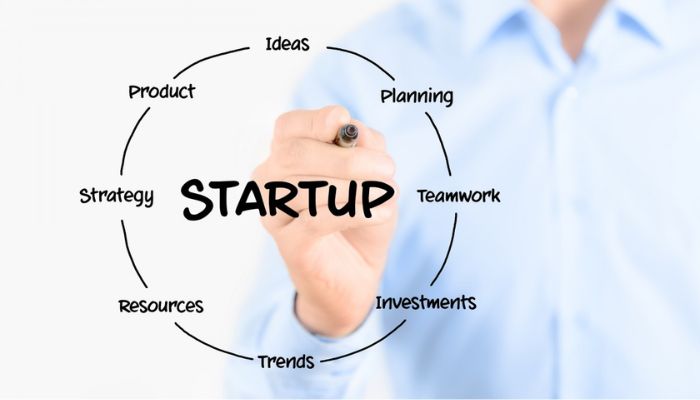
Before diving into the paperwork, it helps to understand the journey ahead. The 7 stages of a startup are universal. Knowing these helps you plan for the future and manage your resources wisely.
From Ideation to MVP
The first stage is Ideation. This is where you find a real problem worth solving. You then move to the MVP (Minimum Viable Product) stage, where you build a basic version of your product to test the market .
Investment and Product-Market Fit
Next comes the Investment stage, where you seek funding. This leads to Product-Market Fit (PMF), ensuring your product satisfies a strong market demand .
Go-to-Market, Growth, and Maturity
Finally, you develop a Go-to-Market strategy to acquire customers, followed by the Growth phase where you scale your operations. The final stage is Maturity, where you aim for stability or an exit .
You may also read :- How to Scale a Startup Business in India: The Ultimate Growth Guide
Step 1: Validate Your Idea & Build an MVP (Minimum Viable Product)
The biggest mistake founders make is building a product nobody wants. This is why 90% startup fail. To avoid this, you must validate your idea before investing time and money.
How to Validate Your Idea Cheaply
You don’t need a lot of money to test the waters. Start by talking to 20-30 potential customers. Ask them about their problems, not about your solution . Use simple tools like Google Forms or Typeform to run surveys. Create a simple landing page and run a small ad campaign for about ₹2,000 to see if people sign up .
Building a Low-Cost MVP
After getting the validation, create a Minimum Viable Product (MVP). MVP is the simplest version of your product that addresses the main problem for first users. It's not required to program from scratch. Take advantage of no-code platforms, such as Bubble, Adalo, and Glide. The cost of these platforms is approximately ₹5,000-6,000/month, and they enable you to create a prototype within a short amount of time. In Airbnb's case, their MVP was simply a web site with pictures of their apartment.
Step 2: Choose a Business Structure
One of the most important aspects of learning to start a startup in India is the choice of the legal structure for the company. This choice will affect your taxes, liability and fund-raising.
Why a Private Limited Company is Best for Startups
For startups planning to raise venture capital, a Private Limited Company is usually the best choice. Most venture capital firms prefer this structure because it easily allows them to issue shares and offer Employee Stock Ownership Plans (ESOPs) .
Other Options (LLP vs. Sole Proprietorship)
In case you are a small business enterprise and don't have any plans to seek external capital, an LLP (Limited Liability Partnership) will be an excellent choice. The DPIIT recognition is normally not available for sole proprietorships and unregistered partnerships, so in order to receive government benefits, such structures should be avoided.
Step 3: Company Registration (Ministry of Corporate Affairs)
The Ministry of Corporate Affairs (MCA) has simplified the registration process through the SPICe+ form. This is the official legal step to incorporate your business.
The SPICe+ Form Explained
The SPICe+ (Simplified Proforma for Incorporating Company Electronically Plus) form is a single integrated form that handles your company incorporation, name reservation, PAN, TAN, GST registration, and even bank account opening . If your authorized capital is up to ₹15 lakhs, the filing fee is zero .
Required Documents for Company Registration
You will need a few essential documents to start. These include the PAN and Aadhaar of all directors, address proof for the registered office, Digital Signature Certificates (DSCs), and Director Identification Numbers (DINs) for the directors .
Step 4: Obtain Necessary Licenses & a Bank Account
After incorporation, your company officially exists, but you need a few more things to operate legally and manage finances.
Opening a Startup Bank Account
Once you receive the Certificate of Incorporation, PAN, and TAN, you must open a current bank account in your company's name. This separates your personal and business finances, which is essential for credibility and tax purposes . Many banks offer zero-balance startup accounts.
GST and Other Licenses
If your annual turnover exceeds ₹20 lakh (or ₹10 lakh in special category states) or products are sold across state lines, you will be required to register for GST. Depending on your industry, you may also require other special licenses.
Step 5: Get DPIIT Recognition
Starting out as a startup in India is vital and recognition by DPIIT (Department for Promotion of Industry and Internal Trade) is key. It offers various facilities such as tax exemptions, funding facility, and expedient IPR process.
How to Apply for DPIIT Recognition

The application process is 100% digital. Visit the Startup India portal and apply for recognition under the 'Get Recognised' section. You'll need to upload your Certificate of Incorporation, PAN, and a pitch deck describing your innovation .
Benefits of DPIIT Recognition
Once recognized, your startup is eligible for a three-year income tax exemption under Section 80-IAC . You can also self-certify compliance with labour and environmental laws, get an 80% rebate on patent filing fees, and access government funding schemes .
Step 6: Secure Funding
Money is the fuel for your startup, but you raise money to grow, not just to survive. Here is a simple breakdown of how startup funding in India works.
The Funding Stages (Seed, Series A, Series B)
Funding usually happens in stages. Seed Funding (₹5 lakh to ₹70 lakh) helps with product development and initial market entry. Series A Funding ($3M - $15M) is for early-stage companies that have product-market fit and need to scale operations and build teams .
Government Schemes and Investor Expectations
India has strong government support for startups. The Startup India Seed Fund Scheme provides up to ₹50 lakh for proof of concept and market entry . Investors in 2026 are looking for capital efficiency and clear unit economics. They want to see that you make money on every customer .
Step 7: The Complete Startup Checklist India
To wrap up, here is a quick summary checklist to help you start your journey. It breaks down the Step-by-Step Roadmap to Launch your startup.
Pre-Incorporation Steps
- Validate your idea with 20-30 customer conversations .
- Define co-founder roles and equity split.
- Choose your business structure (Pvt Ltd is recommended).
Incorporation and Registration
- Obtain DSCs and DINs.
- File the SPICe+ form with the MCA .
- Open a current bank account.
- Apply for DPIIT recognition .
Post-Incorporation Compliance
- Register for GST (if applicable).
- Set up accounting software and hire a CA.
- Apply for tax exemptions under Section 80-IAC .
- File for trademarks to protect your brand.
FAQ
What does it take to launch a start-up in India?
Ideation and validation is the first step. Not yet: don't pay too much attention to paperwork or funding. First, think about a genuine problem that people experience that is painful. After that, try to speak to 20-30 people who you think will want a solution, and find out if they would purchase a solution.
Is it possible to start a Startup with No Money in India?
Yes, you can. You can begin with a basic website to check out your concept. Government schemes such as Startup India Seed Fund Scheme (up to ₹50 lakh) or SSIP 2.0 grant (₹2.5 lakh for student startups) are available for funding. Likewise, the use of no-code tools will help reduce expenses.
How long does it take to register a startup in India?
The registration process is now very fast. Through the SPICe+ form, you can get your Certificate of Incorporation within 7 to 15 working days if all your documents are in order. DPIIT recognition often takes another 7 to 15 days after that .
Is DPIIT recognition mandatory for startups?
While it is not mandatory to operate a business, DPIIT recognition is highly recommended. It unlocks tax benefits, makes you eligible for government funding schemes, provides fast-tracked patent processing, and offers self-certification under labour laws. It is a seal of credibility .



.webp)