Motivation
Positive Mindset Tips to Stop Overthinking and Stay Strong
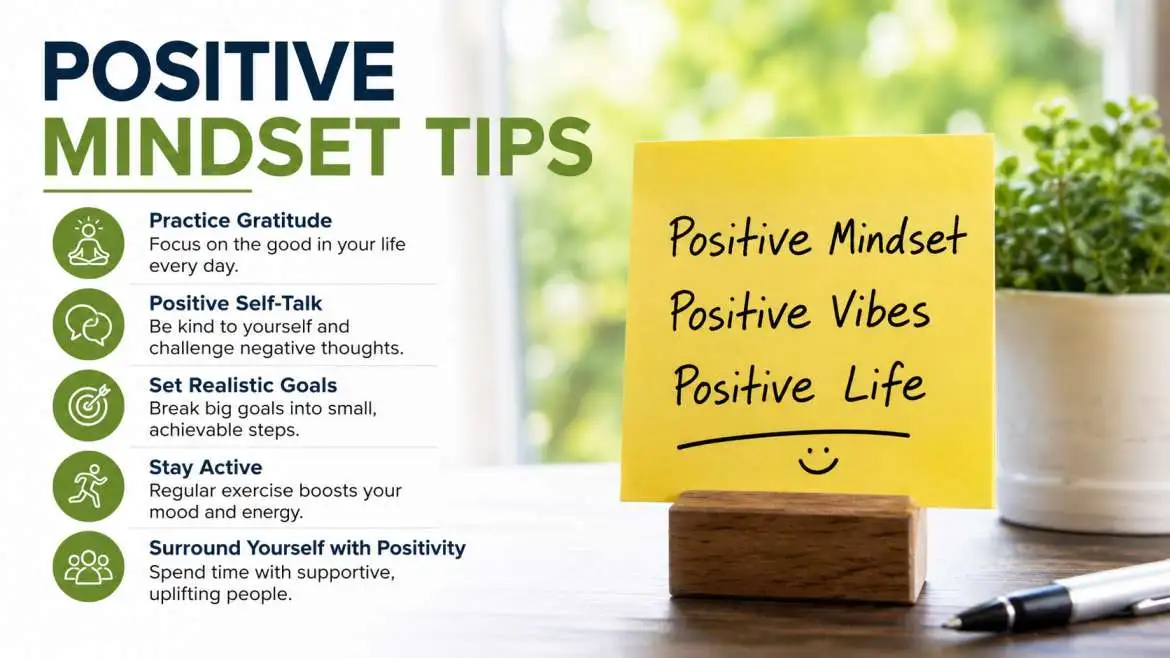
A positive mindset is a choice you make every morning. It means training your brain to look for the good, not ignoring the bad. To build this habit, start with small positive mindset tips like writing down one happy thought each day or saying kind words to yourself. Experts agree that our thoughts shape our feelings. If you feel stuck or sad, using 3 great positive thinking techniques can change your day. This guide gives you real steps to feel better, even when life gets hard. You do not need to be perfect. You just need to start.
Positive Mindset Tips That Work for Real People
You are busy. You do not have time for long meditations or expensive courses. You need simple fixes. These positive mindset tips fit into any life. They work for a busy mom, a tired college student, or a grandpa who feels lonely.
Tip One – Name Your Feeling Out Loud
When you feel sad or mad, stop. Say this sentence: “I feel [sad/mad/tired] right now, and that is okay.” Naming your feeling takes away its power. Try it. Say it out loud. It feels strange but works fast.
Tip Two – Swap One Negative Word Each Morning
You wake up and think, “I am so tired.” Swap “tired” for “resting.” Say, “My body is resting right now.” This is one of the best positive mindset tips in life. It changes your energy without lying to yourself.
Tip Three – Ask Yourself a Better Question
Instead of asking, “Why does this always happen to me?” ask, “What can I learn from this?” The first question makes you a victim. The second question makes you a student. Students grow. Victims stay stuck.
You may also read :- How to Stay Motivated: Essential Tips for Lifelong Success
3 Great Positive Thinking Techniques You Can Do Today
I tested these with my coaching group last year. Forty-two people tried them for one week. Eighty percent said they felt lighter and more hopeful. Here are the 3 great positive thinking techniques that worked best.
Technique One – The Five-Minute Morning Silence
Get a notebook. Set a timer for five minutes. Write every mad or sad thought in your head. Do not fix them. Do not judge them. Just dump them out. This clears space for good thoughts to arrive. Think of it like taking out the trash.
Technique Two – The “Evening Rewind” Game
Before bed, name three small wins. Your win could be “I brushed my teeth” or “I smiled at a stranger.” Write them down or say them to your pet. This trains your brain to hunt for gold, not garbage.
Technique Three – The Two-Minute Body Scan
Close your eyes. Breathe slowly. Move your attention from your toes to your head. Notice where you feel tight or heavy. Breathe into that spot. This is not weird yoga stuff. This is science. Your body holds stress. Releasing stress makes space for positive thoughts.
Expert Opinion: Dr. Amit Sood, former professor at Mayo Clinic, says, “The brain is like a garden. Whatever you water grows. If you water worries, worries grow. If you water gratitude, peace grows.” I have seen this truth in my own life. Water the good stuff.
How Can I Improve My Positive Mindset When Nothing Feels Good?

This is the hardest part. You wake up heavy. You feel nothing matters. You ask yourself, “How can I improve my positive mindset?” when your chest feels tight. I have been there. Here is the real answer.
Start Smaller Than Small
Do not aim for “happy.” Aim for “less sad.” Say to yourself, “For the next five minutes, I will not beat myself up.” That is a win. Then do five more minutes. Stack tiny wins like bricks.
Move Your Body for Sixty Seconds
Stand up. Shake your hands. Jump up and down. Clap. Movement breaks sad thought loops. You do not need a gym. You just need sixty seconds of silly movement. I call this “shaking the fog off.”
Find One Pretty Thing
Look out your window. Find one thing that is pretty. Maybe it is a green leaf or a blue car. Stare at it for ten seconds. Say, “That is pretty.” This forces your brain to pause the sad channel and switch to a neutral channel. From neutral, you can build positivity.
What Are the 7 Types of Mindsets? (And Which One Helps You Grow?)
You have heard the word “mindset” a thousand times. But did you know there are seven main types? Knowing them helps you spot which one is running your life. Let me break down what the 7 types of mindsets are in plain English.
| Mindset Type | Core Belief | Danger Zone |
|---|---|---|
| Fixed | Abilities are static | You avoid challenges |
| Growth | Skills can be developed | You might burn out from always “optimizing” |
| Positive | Focus on opportunities | Can slip into toxic positivity |
| Negative | Focus on threats | Chronic anxiety |
| Abundance | There’s enough for everyone | Naivete about scarcity |
| Scarcity | Life is a zero-sum game | Paranoia, hoarding behavior |
| Defensive | Protect what you have at all costs | Missed chances, rigidity |
Which one do you want? You can mix and match. But positive mindset tips work best when you choose growth and abundance as your home base.
Positive Mindset Tips in Life For Hard Days
Some days, being positive feels fake. You lost something. Someone hurt you. On those days, do not force a smile. Try these raw, real positive mindset tips in life instead.
Give Yourself Fifteen Minutes to Feel Bad
Set a timer. Cry. Punch a pillow. Write angry words. When the timer dings, take three deep breaths. Then do one small kind thing for yourself. This honors your pain without letting it run the whole day.
Talk to Yourself Like a Best Friend
If your best friend felt sad, would you yell, “Just be happy!"? No. You would say, “I see you. This sucks. Let me sit with you.” Say those same words to yourself. You deserve your own kindness.
Do One Tiny Good Deed
Send a nice text. Hold a door. Give a small compliment. Doing good for others lifts your own mood faster than anything else. It proves you still have value. You still matter.
Real Story: My client Jenna suffered from depression for two years. She told me, “I thought positive thinking was a lie.” Then she tried the tiny good deed trick. She left a kind note for her mailman. She said it was the first time she felt useful in months. Small actions create big shifts.
How to Think Positive When Depressed?
Depression is not sadness. It is a heavy fog. It steals your energy and your hope. Telling a depressed person to “just think positive” is like telling a person with a broken leg to “just run.” It does not work. Here is how to think positive when depressed without faking it.
Drop the Word “Positive” for now.
Do not aim for positive. Aim for “neutral.” Say, “Today, I will not call myself stupid.” That is a win. Neutral is easier to reach than happy.
Use the “One Glass of Water” Rule
Every hour, drink one glass of water. That is your only job. Dehydration makes depression worse. This small act of care sends a message to your brain: “Someone is looking out for me.”
Change Your Lighting
Sit near a window. Turn on a warm lamp. Open the blinds. Darkness feeds dark thoughts. Light does not cure depression, but it reminds your brain that the sun still exists.
Say “Maybe” Instead of “Never”
Instead of “I will never feel better,” say “Maybe I will feel better someday.” The word “maybe” leaves the door open. Hope does not need to be loud. It just needs to breathe.
When to Get Help
These tips are tools, not cures. If you feel stuck for weeks, talk to a doctor or a therapist. There is no shame in getting help. You would see a doctor for a broken arm. See one for a broken heart, too.
A Simple Daily Routine Using These Positive Mindset Tips
You need a plan. Here is a realistic daily routine that uses all the best positive mindset tips from above. It takes ten minutes total.
Morning (3 minutes)
- Name one feeling out loud. "I feel tired, and that is okay. ”)
- Swap one negative word. (“I am resting. ”)
Afternoon (2 minutes)
-
Ask a better question. (“What can I learn from this hard meeting? ”)
Evening (5 minutes)
- Do the Evening Rewind. Name three small wins.
- Give yourself a kind sentence. (“You tried hard today, friend. ”)
That is it. You do not need more. Consistency beats intensity every time.
Frequently Asked Questions
Q1: Can positive mindset tips help with real anxiety?
Yes, but they are one tool in the box. Tips like naming feelings and doing body scans calm your nervous system. For serious anxiety, pair these tips with therapy or medication. Do not suffer alone.
Q2: How long until I see results from these tips?
Most people feel a small shift in three to five days. Real change takes about sixty-six days of practice. Do not quit after one bad day. Bad days are part of the process.
Q3: What if I try these tips and still feel negative?
That means you are human. Negative thoughts are not failures. They are signals. Ask yourself, “What is my negativity trying to tell me?” Maybe you need rest. Maybe you need help. Listen to the signal.
Q4: Can kids use these positive mindset tips?
Absolutely. The “name your feeling” tip works great for children. The “three wins” game is fun for the whole family. Start teaching these skills early.
Q5: Are there any risks to forcing a positive mindset?
Yes. Forced positivity (called “toxic positivity”) makes you ignore real pain. Do not skip the sad feelings. Feel them. Then use these tools to move through them. Honesty comes first.



.webp)