Quotes
Words of Wisdom: Inspirational Quotes by Indian Leaders
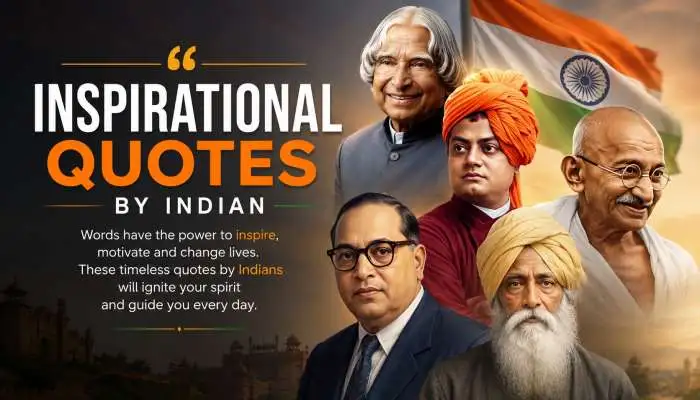
Let’s be honest for a second. We’ve all scrolled past a quote. We nod. We feel a fleeting rush of motivation. And then... nothing changes. That’s the problem with most inspirational quotes by Indian leaders floating around the internet. They become wallpaper. But what happens when you stop treating these words like greeting card poetry and start treating them like operating manuals? That’s when the game flips.
We’re going to dig into five heavy hitters. Not just the text. The friction. The application. The moments where these philosophies either save your startup, your sanity, or your spine. Because whether you are optimizing a website or optimizing your life, the difference between noise and signal is execution.
Swami Vivekananda – The Arsonist of Potential
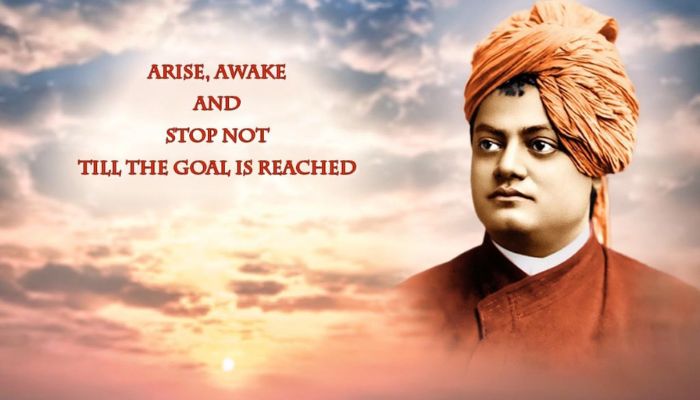
“Arise! Awake! And stop not until the goal is reached.”
You know the quote. But do you know the trap? Most people read this and think "hustle culture." Wake up at 4 AM. Cold showers. Grind until your eyes bleed. That’s not what Vivekananda meant. Not even close.
You may also read :- Deep Positive Vibe Quotes for Mental Peace and Inner Healing
The Real-World Scenario (The Burnout Case)
Take a senior software engineer we’ll call "Rohan." He had this quote tattooed on his laptop lid. He worked 14-hour days for two years. He arose. He awoke. He never stopped. Then his body stopped for him. Herniated disc. Anxiety diagnosis. He reached the goal—a promotion—but lost his health, his marriage was on the rocks, and he hated the code he wrote.
The error? Rohan applied linear force to a nonlinear problem.
The Counter-Intuitive ‘Hot Take’
Here it is: "Arise and awake" has nothing to do with hours logged. It has everything to do with presence. The quote is a call to stop sleepwalking through your decisions. Most of us are awake in bed but asleep at the desk. We reply to emails on autopilot. We agree to meetings we don’t need. Vivekananda’s real radicalism? He demanded we wake up to our own agency.
Under-the-Hood Mechanics (The Effort Switch)
This directly connects to our secondary keyword: "effort and effortlessness life quote." Vivekananda believed in what the Art of Living India quotes later, popularizing it as “effortless action.” Here’s the technical breakdown:
- Effort (Lower gear): Pushing. Controlling. Forcing outcomes. High cortisol.
- Effortlessness (Higher gear): Aligning with skill. Removing internal resistance. Acting without the feeling of strain.
The goal isn’t to stop trying. It’s to stop straining. That’s the secret sauce. When you feel friction in a task, the quote isn’t telling you to push harder. It’s telling you to change the approach.
Swami Vivekananda quotes India often get reduced to motivational posters. But the original context? He was speaking to a generation that felt defeated by colonialism. His “awake” was political, personal, and spiritual simultaneously. We need that same energy today—not against a foreign ruler, but against digital distraction and learned helplessness.
Dr. A.P.J. Abdul Kalam – The Architect of Pragmatic Dreams
“Dream, dream, dream. Dreams transform into thoughts. And thoughts result in action.”
This is the most misused quote in Indian corporate history. Every PPT has it. But notice the sequence. He didn’t say dream and then wait. He said dream → thought → action. No skipping steps.
The Real-World Scenario (The Dreamer vs. The Doer)
Two entrepreneurs. Same incubation center. Same funding. Same year. One had a wall full of Kalam quotes. The other had a whiteboard full of customer interview notes. Who survived? The second one. The first one kept dreaming about the perfect product launch. He was waiting for a sign. Kalam would have called that superstition, not strategy.
The Counter-Intuitive ‘Hot Take’
Stop dreaming in the shower. Dream on a spreadsheet. Kalam was a scientist. A scientist’s dream is a hypothesis, not a fantasy. If your dream doesn’t have a testable next step within 48 hours, it’s not a dream. It’s a daydream. And daydreams are dangerous because they feel productive while delivering nothing.
Under-the-Hood Mechanics (The Action Threshold)
We can link this directly to Dr. A.P.J. Abdul Kalam quotes about the “ignited mind.” His technical insight was that the human brain cannot distinguish between a vividly imagined action and a real one—unless you introduce feedback. So he forced himself to write down three actions every morning. Small. Concrete. Verifiable.
Example:
- Not “work on business”
- But “call two customers by 11 AM and ask one question: what’s broken?”
That’s the Kalam method. Dreams are the fuel. But action is the engine. Without the engine, the fuel just evaporates.
Chanakya – The Strategist Who Hated Naivety
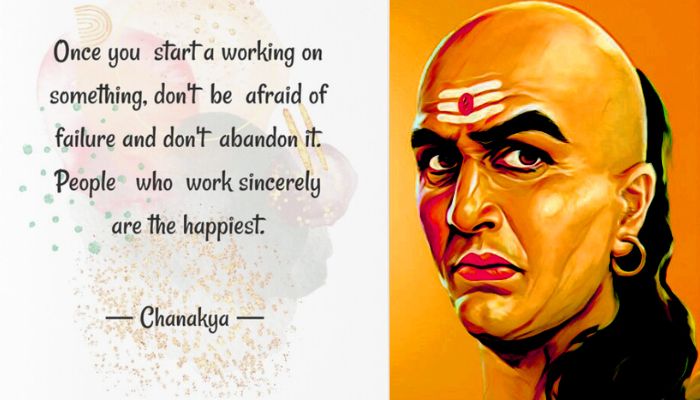
“Before you start some work, always ask yourself three questions: Why am I doing it? What might the results be? Will I be successful?”
The Real-World Scenario
A product manager at a fintech startup was obsessed with adding “AI” to everything. Because competitors did it. Because investors liked the buzzword. He never asked Chanakya’s three questions. Result? Six months of engineering waste. A feature nobody used. Layoffs followed.
The Counter-Intuitive ‘Hot Take’
Chanakya was not a nice guy. He was a realist. And here’s the hot take: most inspirational quotes by Indian leaders about life are too gentle. They say “follow your passion.” Chanakya says, "Make sure your passion isn’t stupid.” That’s a different energy. And frankly? More useful.
We need less “you can do anything” and more “you can do anything, but should you?”
Under-the-Hood Mechanics
Chanakya quotes are essentially pre-modern decision trees. Let’s operationalize his three questions:
- Why am I doing it? (Separate ego from necessity. If the answer is “because others are doing it,” abort.)
- What might the results be? (Run a pre-mortem. Imagine it fails. What broke? Fix that before starting.)
- Will I be successful? (Honest capability audit. Do you have the resources? The skill? The tolerance for pain?)
Most people skip #3 because they’re afraid of the answer. Chanakya would say that fear is the answer.
The Art of Living and the Effort Paradox
“Effort and effortlessness are not opposites. They are rhythms.”
This isn’t a famous quote in the traditional sense. But it should be. Because it bridges the gap between ancient wisdom and modern performance science.
The Real-World Scenario (The Athlete’s Paradox)
Watch a 100m sprinter. The face is contorted. Veins pop. That’s effort. Now watch a cheetah run. Effortless. Smooth. Which one is faster? The cheetah. But the cheetah still tries. The difference? The cheetah has no internal resistance. No voice saying “don’t trip.” No overthinking.
The Counter-Intuitive ‘Hot Take’
Sometimes, the effort and effortlessness life quote philosophy gets mis-sold as “don’t try hard.” That’s nonsense. The Art of Living India quotes tradition and actually teaches that effortlessness is the result of precise effort. You practice the guitar clumsily for 1,000 hours. Then one day, your fingers just know. That’s not magic. That’s neural myelination.
Under-the-Hood Mechanics (The 80% Rule)
Here’s the technical trick. In high-stakes situations (exams, pitches, presentations), aim for 80% of your maximum effort. Not 100%. Why? Because 100% effort introduces micro-tremors. In the voice. In the hands. In the decision-making. 80% effort keeps you loose, adaptable, and present. That’s the effortless zone.
Art of Living India quotes often emphasize the breath as the regulator. When you feel effort turning into strain, your breath shortens. That’s the signal. Elongate the exhale. Suddenly, the same task feels lighter. Try it. It works. Until you forget to breathe. Then it doesn’t.
Life Quotes That Don’t Insult Your Intelligence
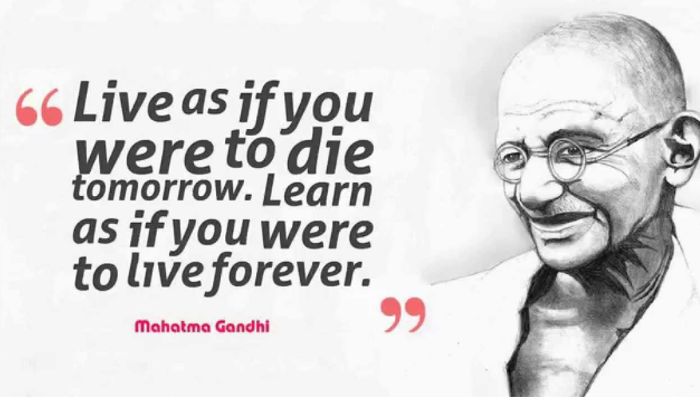
Let’s aggregate the practical takeaways from inspirational quotes by Indian leaders about life. Because life isn’t a LinkedIn post. It’s messy. It’s ambiguous. And most quotes fail because they promise certainty.
The Real-World Scenario (The Mid-Career Pivot)
A marketing director, age 42. Good salary. Bored out of her skull. She reads a quote: “Leap and the net will appear.” That’s a nice sentiment until you have a mortgage and two kids. So she didn’t leap. She felt like a coward. Wrong framing.
The Counter-Intuitive ‘Hot Take’
The best inspirational quotes by Indian leaders don’t tell you to leap. They tell you to build the net while standing on the cliff. That’s what Chanakya did. That’s what Kalam did. Drastic action is usually bad strategy. Gradual, intelligent pressure? That’s how empires shift.
Under-the-Hood Mechanics (The 1% Rule)
Apply the Kalam-Chanakya hybrid model:
- Identify one area of life that feels stuck.
- Change exactly 1% of your behavior in that area tomorrow.
- Do not change anything else.
- Repeat for 66 days.
That’s not sexy. But it’s more effective than 99% of “life-changing” quotes. Because habits don’t respond to inspiration. They respond to repetition.
Final Word
We started with a confession. Most quotes are useless. Not because the words are wrong. But because we don’t install the practice in front of them. Inspirational quotes by Indian leaders have survived centuries not because they are poetic. They survived because they are engineered. Each one contains a specific instruction for a specific human failure:
- Vivekananda tackles lethargy.
- Kalam tackles aimless dreaming.
- Chanakya tackles naivety.
- The Art of Living tackles strain.
Your job isn’t to collect them. Your job is to pick one. Test it for seven days. Break it. Refine it. Make it yours. Because the real quote? The one nobody writes on a poster? It’s this: Wisdom is useless unless it changes your next decision.
FAQ
Q1: What is the most powerful inspirational quote by an Indian leader for daily life?
Swami Vivekananda’s “Arise, awake, and stop not until the goal is reached.” But only if you define “awake” as conscious action, not just waking up early.
Q2: How can Swami Vivekananda's quotes about India help with modern stress?
By reframing stress as misdirected energy. Vivekananda taught that restlessness is power leaking. Channel it into one focused action, not ten panicked ones.
Q3: Which Dr. A.P.J. Abdul Kalam quote is best for students?
“Don’t take rest after your first victory because if you fail in the second, more lips are waiting to say that your first victory was just luck.” Harsh. Accurate.
Q4: Are Chanakya quotes still relevant for business in 2026?
Absolutely. His three-question pre-action filter prevents 80% of strategic errors. Most startups fail not from bad ideas, but from ideas that never faced Chanakya’s cross-examination.
Q5: What do inspirational quotes by Indian leaders about life teach that Western quotes don’t?
Integration. Western quotes often separate work, family, and spirit. Indian leaders (Vivekananda, Kalam, Sri Sri Ravi Shankar) treat life as a single system. A problem at work is a problem at home. Fix the root, not the symptom.
Q6: How do Art of Living India quotes define success?
Success is not burnout with a trophy. It’s sustainable, joyful contribution. The Art of Living framework adds “effortless action” as a metric: if you’re exhausted by your success, it’s not success. It’s debt.
Q7: Can you explain the effort and effortlessness life quote in one sentence?
Effort is the boat; effortlessness is the current. Row until you find the current. Then ride it.
Q8: Which Indian leader has the best quote about fear?
A.P.J. Abdul Kalam: “Don’t fear failure. Fear being in the same place next year as you are today.” That’s not a feel-good quote. That’s a mirror.


.webp)